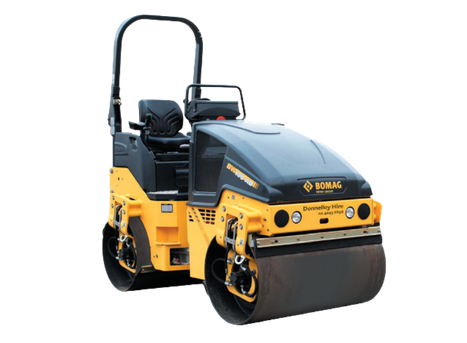
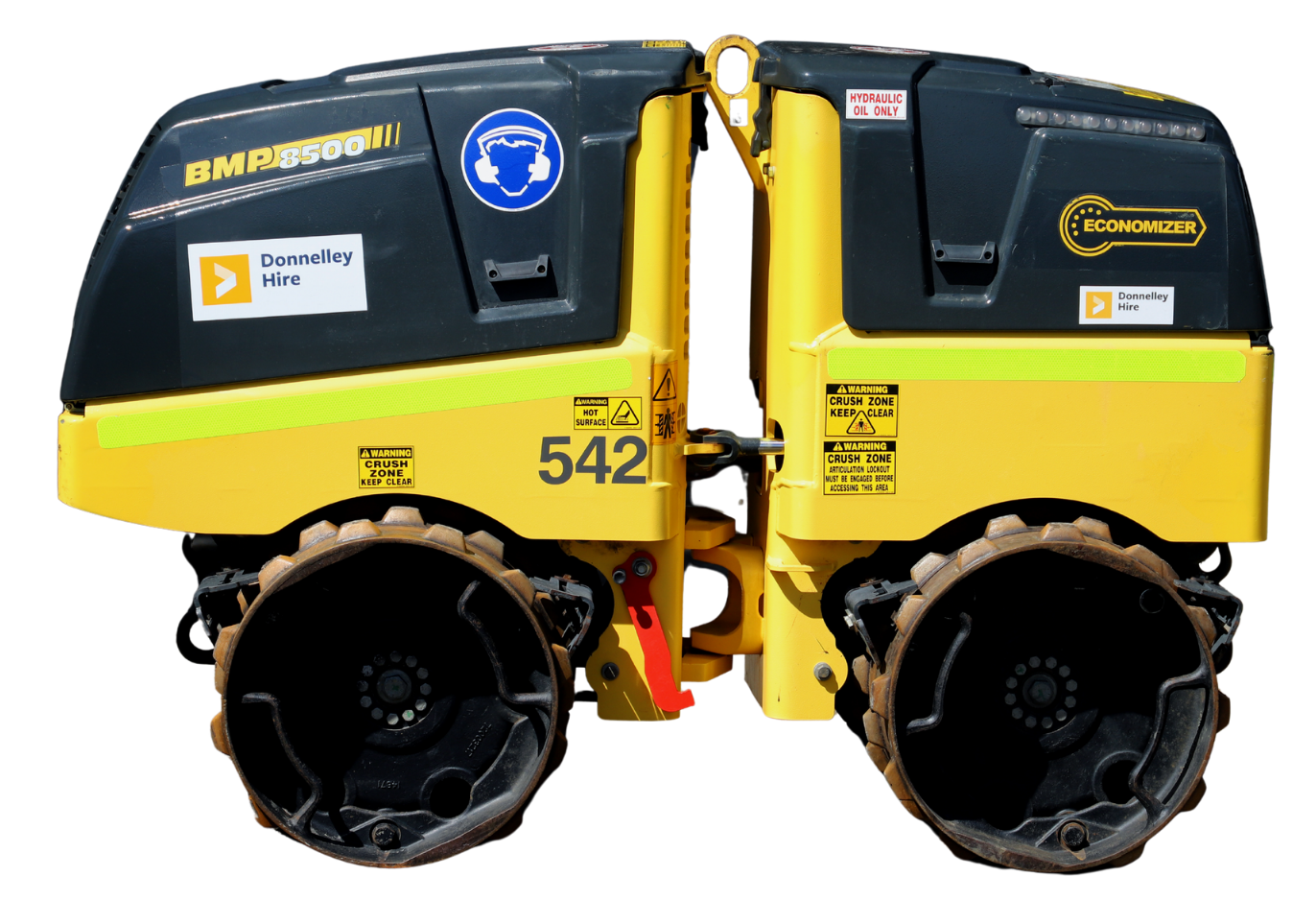
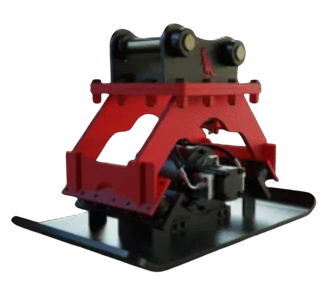
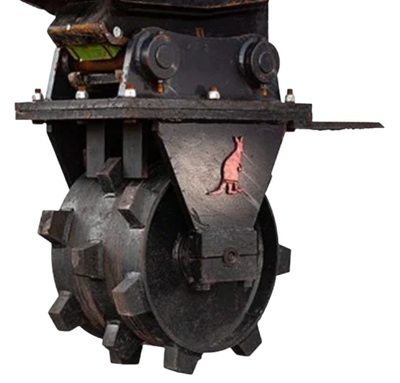
The right compactor depends mainly on two things: the material (granular, like road base and sand, or cohesive, like clay) and where you are compacting (open areas, trenches, behind walls or on slopes). Granular material compacts best with vibration, using a smooth drum roller or compaction plate. Clay compacts best with kneading pressure, using a padfoot trench roller or compaction wheel. Donnelley Hire supplies all four from our Wollongong and Nowra branches.
The four options at a glance
| Compactor | Best material | Best location |
|---|---|---|
| 2.5T smooth drum roller | Road base, gravel, asphalt | Open, flat areas: driveways, paths, car parks |
| Remote trench roller | Clay and cohesive soils | Trenches, footings, confined areas |
| Excavator compaction plate | Granular fill | Trenches, behind retaining walls, slopes and batters |
| Excavator compaction wheel | Clay backfill | Deep, narrow trenches |
Why does compaction matter?
Poorly compacted ground settles over time. That leads to cracked slabs and driveways, sunken trenches, failed pavers and retaining walls that lean. Getting compaction right at the start costs far less than repairing settlement later.
Smooth drum roller: for road base and asphalt
Our 2.5 tonne tandem roller vibrates through both steel drums to compact granular materials and asphalt in open areas. It is the right choice for driveways, paths, car parks and small road repairs.
Trench roller: for clay and confined areas
Our remote controlled trench roller has padfoot drums that knead clay and cohesive soils. The operator controls it from outside the trench, which keeps them clear of the trench walls.
Compaction plate: for trenches, walls and slopes
Mounted on an excavator, the compaction plate reaches into trenches, behind retaining walls and onto batters, compacting granular fill where rollers cannot go.
Compaction wheel: for deep, narrow trenches
Also excavator-mounted, the compaction wheel compacts clay backfill in deep, narrow trenches from above, so nobody needs to enter the trench.
Tips for good compaction
- Work in layers. Compact thin layers rather than one deep fill; follow the layer thickness in your specification.
- Get the moisture right. Material that is too dry or too wet will not compact properly.
- Overlap passes and work in a consistent pattern.
- Test where required. Many projects specify compaction testing; check your engineer’s or council’s requirements.
Frequently asked questions
What compactor is best for a driveway?
A smooth drum roller for the road base, after spreading and levelling.
What compactor is best for clay?
A padfoot trench roller or an excavator compaction wheel.
How do I compact behind a retaining wall?
With an excavator compaction plate, in layers, as the wall is backfilled.
Can I hire a compactor with an operator?
Yes. Wet hire is available on every machine and attachment, with a one-day minimum.
Hire the right compactor
Call us at 1300 344 669, or request a quote online.