
Rock Saw
Suits 1T - 22T
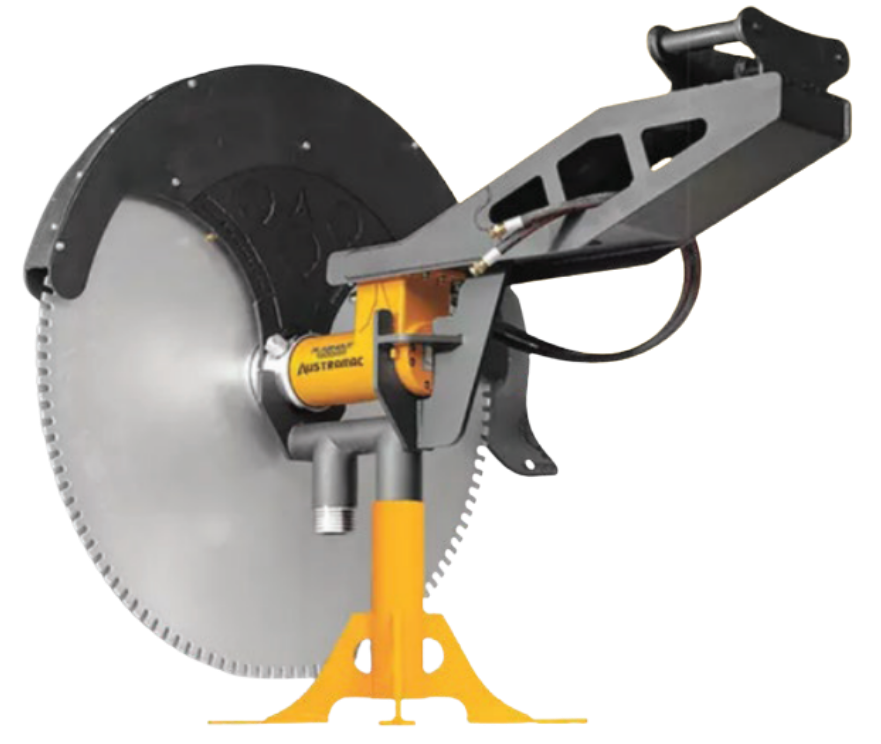
An excavator rock saw uses a rotating cutting wheel fitted with hardened teeth to cut through sandstone, rock and concrete. It produces clean, narrow and straight cut lines that a bucket or hammer cannot match, with far less vibration than hammering.
| Model | 1000 RM | 1400 RM | 1800 RM | 2200 RM |
|---|---|---|---|---|
| Suits excavator | 1T–4T | 4T–8T | 8T–15T | 15T–22T |
| Weight (kg) | 115 | 150 | 260 | 870 |
| Blade diameter (mm) | 1,020 | 1,400 | 1,800 | 2,200 |
| Cut Thickness (mm) | 11 | 10 | 11 | 13 |
| Max. cut depth (mm) | 450 | 600 | 790 | 957 |
| Working Oil Flow (Lpm) | 15–75 | 20–75 | 80–140 | 125–210 |
| Max. Hydraulic Pressure (BAR) | 200 | Relief Valve | Relief Valve | Relief Valve |
| Ideal working pressure (BAR) | 160 | 170 | 210 | 210 |
| Min Hydraulic Pressure (BAR) | 140 | 120 | 150 | 170 |
What are rock saws used for?
- Cutting service and drainage trenches through rock
- Cutting precise edges in sandstone for footings, pools and walls
- Cutting concrete slabs and pavements along a line
- Trenching in rock close to structures, where hammer vibration is a concern
- Cutting sandstone before removal, so a hammer or ripper can break it out in sections